
Reports and policy briefs

Investing in Syria: why misreading local power sinks deals
Dr Naeem illustrates how In Syria, compliance with Damascus is necessary but never sufficient. A decade of war has left a state that is centralised on paper and fragmented in practice, where real authority is still as personal and regional as it is institutional. An investor who routes everything through the capital, assuming it can deliver the governorates, will fail. Those who succeed will read who actually holds power on the ground — at the centre and locally — and design projects that serve both interests from the first day.
Saudi Arabia’s power sector transformation: execution, resilience, and the European partnership opportunity
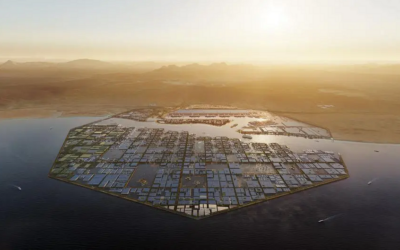
Energy Institute Fellow Kate Dourian walks us through Saudi Arabia’s energy transformation, one driven by economic logic as much as climate ambition: every barrel no longer burned domestically is a barrel available for export. With electricity demand growing at 7.9% in 2025 to a record 349 TWh, the pressure to restructure the power system is acute. The kingdom’s objective of 100 to 130 GW of renewables by 2030, world-record solar tariffs, and a battery storage rollout that would rank it third globally has seen it overtake the UAE as the Gulf’s leading renewables market. The Hormuz disruption of 2026 confirmed that renewables are a security asset as much as a decarbonisation tool, a lesson Europe learnt in 2022. For European policymakers, Saudi Arabia is now positioning itself as a long-term supplier of green hydrogen to European markets, with active engagement in EU certification frameworks signalling a choice to build regulatory convergence, not simply to comply with it.

A multilateral collateralized digital currency as an instrument of influence for oil-exporting states
Dr Jean-Francois Seznec and Azal Advisors principal Nicolas Dunais assess how an oil-backed digital currency could provide Gulf hydrocarbon exporters partial monetary policy independence and enhanced global influence in a context of strategic competition between China and the United States and de-dollarization.

How can GCC countries achieve equilibrium in the China-India competition?
Dr Janardhan from the UAE’s Anwar Gargash Diplomatic Academy, and Azal Advisors’ Nicolas Dunais assess the growing competition between China and India, driven by territorial disputes and China’s growing strategic dominance and assertiveness. Both countries are also increasing their demand for energy and raw materials to fuel their economic growth. In this report, the authors argue that Gulf policymakers should pursue a balanced relationship with China and India, avoid “picking sides”, and where possible, encourage them to cooperate rather than compete in the commercial and security realms.

The GCC in the Eastern Med: balancing economic and security interests
The Eastern Mediterranean continues to be an area of growing importance for some GCC States, on the back of commercial interests, political antagonism, and broader security concerns. In the last years, Gulf involvement has weighed more heavily towards the security dimension, in no small part due to the projection of the GCC rift into the region. Yet if Gulf Arab States are to reap the dividends of their much-needed investments in the region’s commercial infrastructure, it will be in their interest to minimize military posturing and focus instead on economic partnerships.

Diplomacy, deconfliction and reconstruction: opportunities for a joint US-Saudi effort in Yemen
Ambassador (R) Stephen Seche argues that re-engaging diplomatically in efforts to resolve the Yemeni conflict represents an opportunity for Saudi Arabia and the broader GCC to work together towards a peaceful resolution, through a sustained engagement with all involved parties, including Iran, if recently resumed nuclear talks progress sufficiently to add regional-security issue to the agenda.

Outlook for the petroyuan and implications for GCC monetary policy
For the GCC’s oil & gas exporters, a shift towards the petro-yuan has long been perceived as detrimental to the strategic security partnership with the United States. In our latest report, the Atlantic Council’s Jean Francois Seznec and Azal Advisors Principal Nicolas Dunais argue that the combination of energy-flow rebalancing, loose US monetary policy, and financial reforms in China are paving the way for a broader acceptance of the renminbi by Gulf hydrocarbon exporters while minimizing risks to the relationship with the United States.

Nudging GCC citizens to sustainability: the imperatives of cultural awareness & local knowledge
Many GCC governments have established or are in the process of establishing behavioural economics (“nudge”) units as an additional instrument of policymaking, with the support of Western experts. With sustainability considerations becoming more central in the policy development process, nudging has a key role to play in effectively changing citizen behaviour. Yet local specificities mean that replicating models which have worked abroad is fraught with risk: social habits among GCC citizens can result in nudge campaigns having the opposite effects to the ones intended. In this context, it is essential to leverage local expertise to ensure campaigns are effectively delivered and government efficiency is maximized.

GCC food security: mitigating the impact of climate risks among supplier countries
While GCC states have proven food-resilient during Covid-19, the looming effects of climate change on food security warrant efforts to develop adapted environmental and trade policies. In particular, GCC states need to place more emphasis on trade relations, yet also understanding the climate risks in producing countries to ensure future supply chain sustainability and thus food security.