
Sovereign and institutional engagement in frontier markets
Azal Advisors helps sovereign and institutional clients manage risk, expand influence, and seize opportunities in politically complex environments. We combine a deliberately diverse network of senior advisors with trusted in-country relationships, producing insight worth acting on and facilitating the engagements that advance our clients’ objectives. We are politically independent, discreet, and clear about the limits of what we know.
WHAT WE DO
PRESENCE THAT PRODUCES INSIGHT AND OPPORTUNITY
Global complexity is intensifying, driven by geopolitical rivalry, economic realignment, and technological disruption. In this environment, sound decisions depend on expertise, judgment and trusted relationships that cannot be reached from a desk. We provide insight from the ground, support decision making, surface opportunities and facilitate cross-border engagement for sovereign and institutional clients.

SOVEREIGN ADVISORY
Bilateral cooperation strengthening; sovereign investment strategy; independent political, economic and social assessments; pre-diplomatic engagement.
INSTITUTIONAL ADVISORY
Investment sourcing; stakeholder mapping; political and security assessment; partner identification and due diligence.
OUR APPROACH
BRIDGING EXPERTISE WITH STRUCTURE
Pertinent advice requires experts who inhabit it from different vantage points, ground truth, and the ability to structure that advice for senior decision makers. Our team is built on that principle: geographic, cultural and intellectual diversity; and rigorous, structured delivery. Because the questions our clients face demand nothing less.
PUBLICATIONS
SELECTED POLICY BRIEFS AND RESEARCH REPORTS
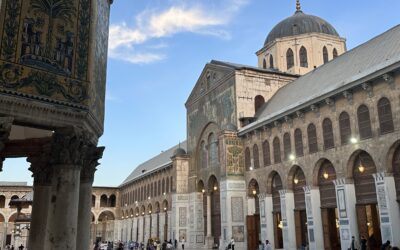
Investing in Syria: why misreading local power sinks deals
Dr Naeem illustrates how In Syria, compliance with Damascus is necessary but never sufficient. A decade of war has left a state that is centralised on paper and fragmented in practice, where real authority is still as personal and regional as it is institutional. An investor who routes everything through the capital, assuming it can deliver the governorates, will fail. Those who succeed will read who actually holds power on the ground — at the centre and locally — and design projects that serve both interests from the first day.
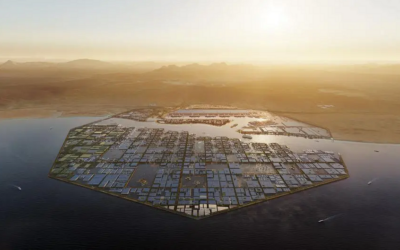
Saudi Arabia’s power sector transformation: execution, resilience, and the European partnership opportunity
Energy Institute Fellow Kate Dourian walks us through Saudi Arabia’s energy transformation, one driven by economic logic as much as climate ambition: every barrel no longer burned domestically is a barrel available for export. With electricity demand growing at 7.9% in 2025 to a record 349 TWh, the pressure to restructure the power system is acute. The kingdom’s objective of 100 to 130 GW of renewables by 2030, world-record solar tariffs, and a battery storage rollout that would rank it third globally has seen it overtake the UAE as the Gulf’s leading renewables market. The Hormuz disruption of 2026 confirmed that renewables are a security asset as much as a decarbonisation tool, a lesson Europe learnt in 2022. For European policymakers, Saudi Arabia is now positioning itself as a long-term supplier of green hydrogen to European markets, with active engagement in EU certification frameworks signalling a choice to build regulatory convergence, not simply to comply with it.

A multilateral collateralized digital currency as an instrument of influence for oil-exporting states
Dr Jean-Francois Seznec and Azal Advisors principal Nicolas Dunais assess how an oil-backed digital currency could provide Gulf hydrocarbon exporters partial monetary policy independence and enhanced global influence in a context of strategic competition between China and the United States and de-dollarization.